On May 20, we brought together five voices from Spanish corporate finance in Madrid to analyze how M&A is changing in the mid-market: “Dealmakers: The New Rules of the Mid-Market.” The conversation brought together the perspectives of a private equity firm, investment banking, an independent advisor, a law firm, and a digital platform — five different angles on the same market.
Below are the six key takeaways we came away with. They aren't abstract trends: they're the dynamics already shaping how lower mid-market and mid-market deals close (or fall through) in Spain in 2026.
Date
Organised by





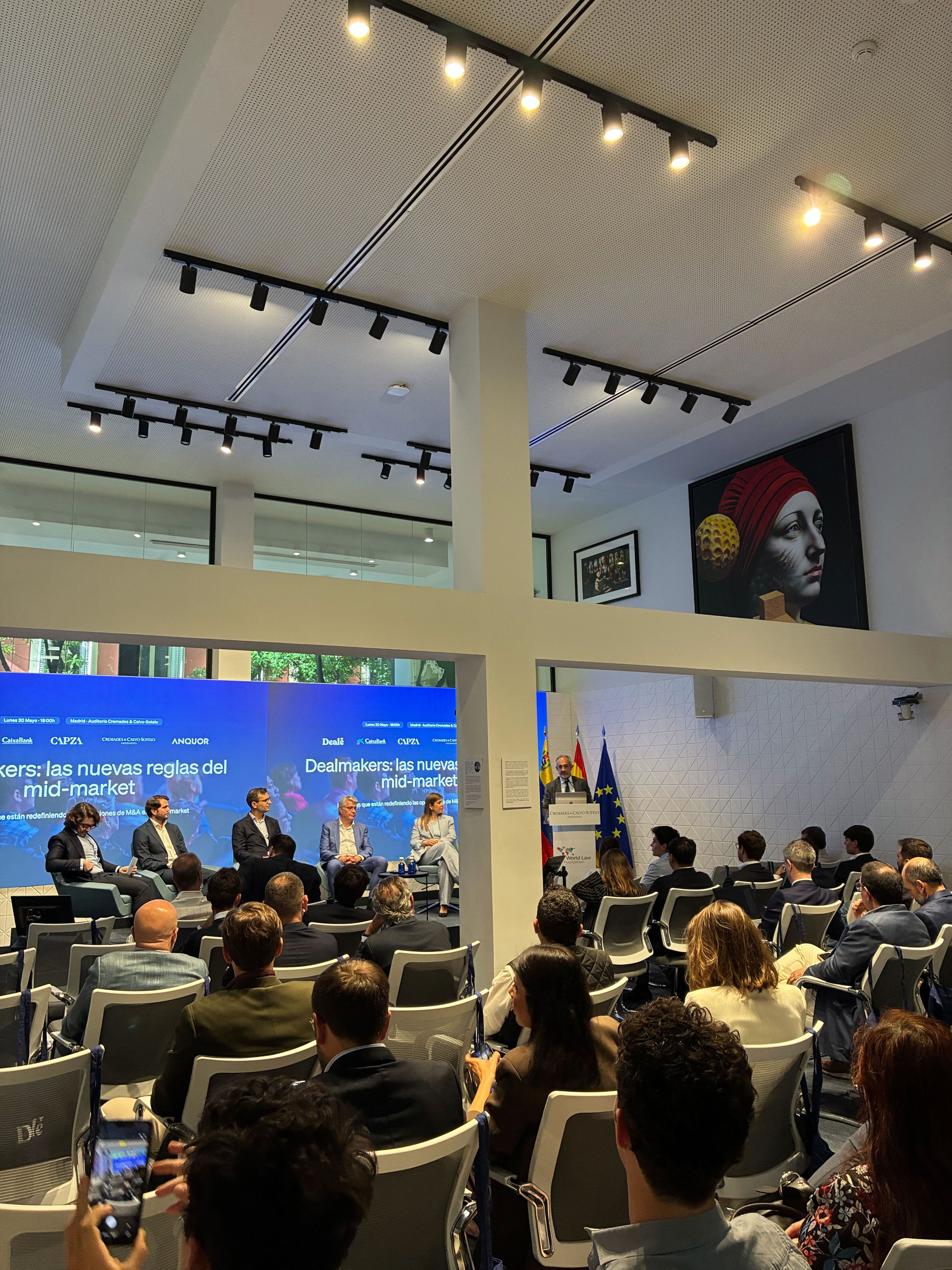
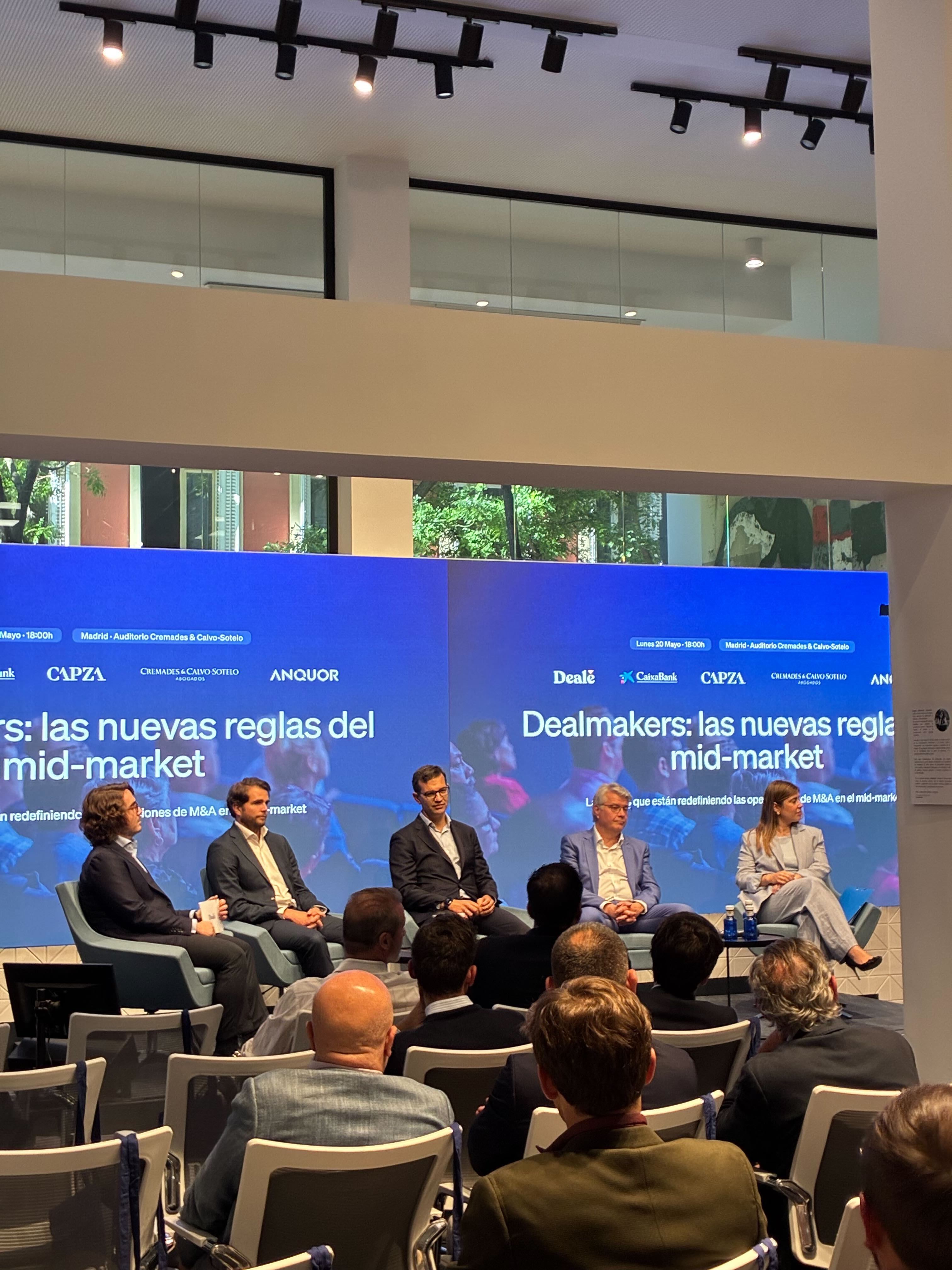
One of the most practical parts of the event was the discussion about real deal timelines. Far from the image of processes that close in a matter of weeks, the reality of the Spanish mid-market is more demanding:
In other words: buy-and-build strategies — where a fund adds successive acquisitions to a platform — move faster because the processes are standardized. Stand-alone deals, especially when the seller and buyer are unfamiliar with the process, require more time for both sides to learn.
And what holds up closing? The consensus was unanimous: data availability. Companies that don't provide information as quickly as the buyer needs can stall (or even kill) deals that were on track in terms of price.
While large global deals are hit by geopolitical turbulence and macroeconomic uncertainty, the Spanish mid-market has proven far more resilient. The reason is structural: deals in this segment are driven by life events (retirement, succession, professionalization) and are mostly local.
For CaixaBank, this translates into a positive outlook for the segment: there are more and more active buyers looking for opportunities in the lower mid-market, which gives sellers the ability to choose their buyer — something unthinkable just a few years ago.
One of the most talked-about metaphors of the event came from Jorge Antón, when he described how CAPZA assesses management teams before investing:
The takeaway for business owners thinking about selling: professional buyers (funds, sophisticated strategic buyers) don't just buy financial statements — they buy a team. Strong, aligned management with the ability to execute weighs as much in the valuation as EBITDA. And the reverse is also true: two companies with identical numbers can receive very different multiples depending on the confidence their management team inspires.
This was probably the most practical advice of the event, with direct implications for any business owner considering a sale. It concerns the exact moment to bring in legal counsel: ideally at the NDA stage and, above all, before signing the LOI.
The observation behind this recommendation is very telling: in their experience, deals that fall through almost never do so because of price. They fall through because the partners aren't aligned on how to structure the exit, what protections to offer the buyer, and how post-closing risks are allocated. And all of that is far easier to handle before an LOI is signed than after.
A common thread running through the entire conversation, though not always explicitly, was generational succession. A very significant share of deals in the Spanish mid-market isn't driven by a strategic growth decision, but by a demographic reality: 16% of Spanish business owners will reach retirement age before 2030, and many have no clear family successor.
This explains why the mid-market is the most dynamic segment: there's a natural, predictable flow of sellers entering the market. If you're in this situation and want to understand your options, we have a dedicated guide on how to sell a business when you retire.
From the perspective of the independent advisor with an international outlook, the event's message was one of moderate optimism. Spain remains an attractive destination for foreign capital, though with some caution heading into the coming months:
Adriana Estévez added to this view with a concrete figure from her firm: since February, the market has been picking up, regaining momentum after a more cautious first quarter due to geopolitical tensions.
Taken together, the takeaways we heard point to the same idea: Spanish mid-market M&A is in a very favorable moment for sellers, but with growing demands for a more professional process. Coming in prepared — with a well-structured company, information on hand, a strong management team, and the right advice — increasingly makes the difference between a deal that closes at a fair price and one that falls by the wayside.
As José Manuel Castro made clear: the buyers are out there. The question is whether sellers will be ready when they call.
Don't miss Deale's upcoming events
Get exclusive access to our upcoming events, analysis and conversations about buying and selling companies and M&A for SMEs


